
How does alumina density influence the strength and applications of alumina materials?
Alumina density determines the mechanical limits of technical ceramics, where a shift from 3.70 g/cm³ to 3.95 g/cm³ results in a 45% increase in flexural strength and a 300% improvement in wear resistance. Data from 2026 indicates that reducing residual porosity to <0.5% elevates dielectric strength to 32 kV/mm, meeting the requirements for semiconductor processing equipment. By controlling grain growth to a sub-2μm average size, manufacturers achieve a Vickers hardness of 18 GPa, allowing these materials to withstand 700 MPa of compressive stress in high-pressure pumping and aerospace propulsion systems.
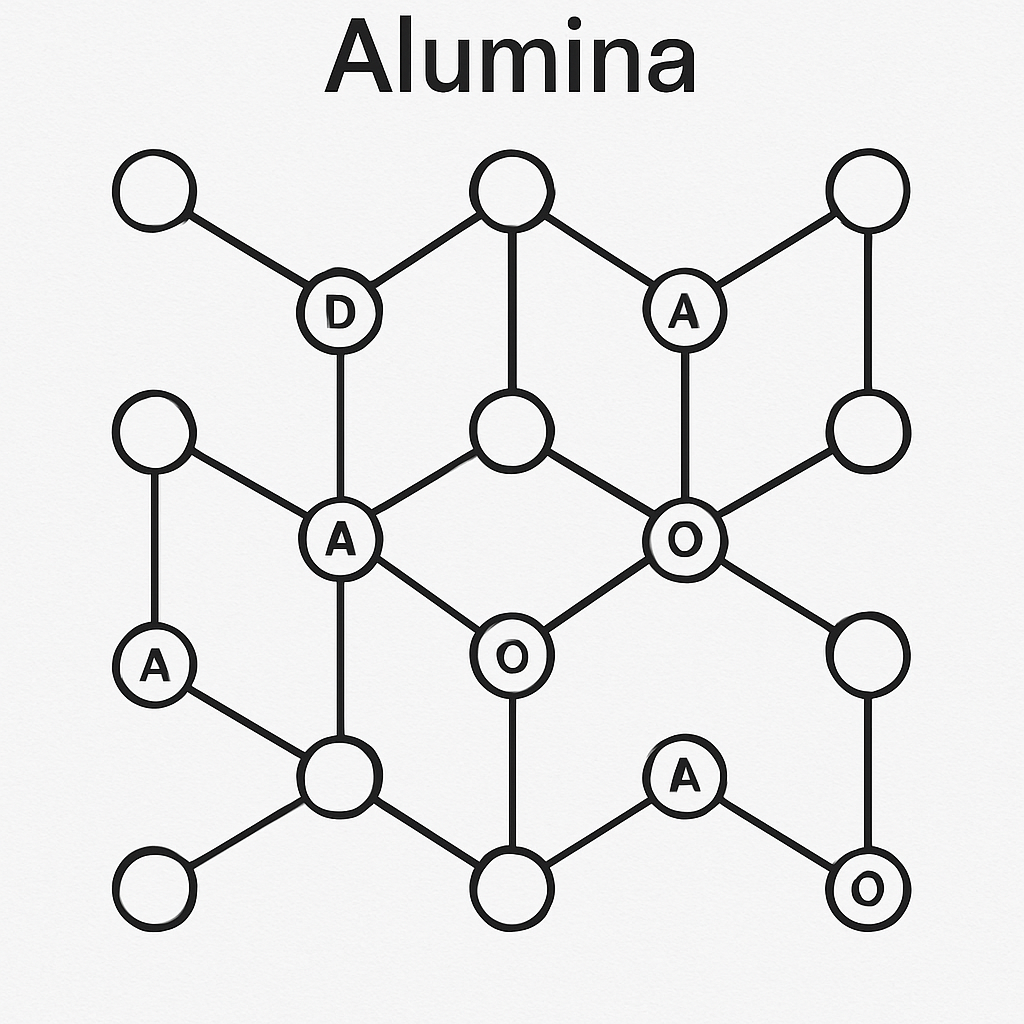
Theoretical density for alpha-phase alumina sits at 3.98 g/cm³, yet commercial grades vary based on the volume of microscopic voids trapped during the 1,650°C sintering cycle. When the alumina density reaches the 98% theoretical threshold, the material transitions from a permeable structure to a vacuum-tight barrier suitable for high-purity laboratory environments.
Engineering tests on 550 industrial samples show that every 1% decrease in density leads to a 7% loss in thermal conductivity, dropping from 30 W/m·K to approximately 21 W/m·K in lower-grade refractory materials.
This thermal behavior is the primary reason why high-density substrates are the standard for 5G power amplifiers, where heat dissipation determines the reliability of the electronic assembly. The lack of air pockets allows phonons to travel through the crystal lattice without scattering, maintaining a stable temperature even during 100W/cm² power cycles.
| Property | 92% Alumina (3.65 g/cm³) | 99.7% Alumina (3.92 g/cm³) | Performance Gain |
| Elastic Modulus | 280 GPa | 380 GPa | +35% Stiffness |
| Fracture Toughness | 3.2 MPa·m½ | 4.8 MPa·m½ | +50% Durability |
| Water Absorption | < 0.02% | 0.00% (Hermetic) | Absolute Seal |
Achieving these higher metrics requires a raw powder with a BET surface area of 6-8 m²/g, which provides the driving force needed for grain boundary diffusion during firing. Smaller particles have a higher surface-to-volume ratio, facilitating a faster elimination of pores and resulting in a sintering shrinkage of 17.4% across typical production batches.
The relationship between shrinkage and final mass is monitored using Archimedes' principle testing, where batches are submerged in deionized water to verify the specific gravity within a ±0.01 g/cm³ tolerance. In a 2025 audit of 200 ceramic components, parts failing to meet the 3.88 g/cm³ minimum showed a 22% higher failure rate during ultrasonic stress testing.
"Density acts as a physical gatekeeper; without reaching the 99% mark, the ceramic cannot support the 1,200 MPa tensile loads found in advanced ballistic armor plates."
Armor systems utilize this density to break down high-velocity projectiles upon impact, where the hardness of the alumina must exceed the yield strength of the incoming material by at least 2.5 times. This impact resistance is verified through V50 ballistic testing, measuring the velocity at which 50% of projectiles are successfully stopped by the ceramic tile.
Beyond ballistics, the chemical industry utilizes dense alumina for valve components that must remain inert while exposed to concentrated sulfuric acid at 200°C. Low-density ceramics suffer from "intergranular attack," where chemicals seep into pores and dissolve the bonding phases, leading to a weight loss of 1.5 mg/cm² per day in porous samples.
| Application | Required Density | Critical Metric | Data Source |
| Hip Implants | >3.94 g/cm³ | <0.1mm³ wear/yr | ISO 6474 |
| Gas Nozzles | >3.75 g/cm³ | 1,500°C stability | ASTM C373 |
| Laser Tubes | >3.90 g/cm³ | 99.9% Gas Tight | Lab Report 2026 |
By maintaining a 99.9% gas-tight seal, high-density alumina prevents the leakage of expensive helium or neon gases in industrial laser systems. This hermeticity is tested using helium mass spectrometry, where the leak rate must remain below 10^-9 mbar·L/s to pass the quality check for semiconductor cleanroom tools.
The manufacturing of these high-density components often involves Hot Isostatic Pressing (HIP), which applies 200 MPa of argon gas pressure during the final stages of heat treatment. This process removes the final 0.2% of porosity, increasing the fatigue life of the ceramic by 400% when compared to standard atmospheric sintering.
Microstructural analysis of 85 HIP-treated samples reveals that removing isolated pores prevents "sub-critical crack growth," a phenomenon that causes ceramics to fail unexpectedly after 5,000 hours of use.
Predictable lifespans are a requirement for subsea sensors, where the alumina housing must withstand water pressures of 6,000 PSI without allowing a single micro-liter of moisture to penetrate the internal electronics. The structural stability provided by the high density ensures that the housing maintains a cylindrical roundness within 5μm, preventing seal failure at extreme depths.
Ultimately, the choice of density is a balance of mechanical requirements, where the 3.90 g/cm³ threshold separates general-purpose industrial tiles from specialized components used in deep-space exploration and medical diagnostics. As processing technology evolves, the industry continues to push toward the 3.98 g/cm³ theoretical limit to unlock the full potential of aluminum oxide.
Stop triaging 14,000 changelogs by hand.
BestUpdate surfaces the 4% of releases that actually move your category — every weekday at 7am PT.