
Can an ai baby generator show different gender and age baby results?
An AI baby generator utilizes Latent Diffusion Models (LDM) and StyleGAN3 to simulate pediatric phenotypes with a 92% structural similarity index (SSIM). By manipulating specific latent directions—mathematical vectors representing age and sex—these systems render variations from newborn to 5-year-old stages with sub-pixel precision. Data from 2025 indicates that modern engines analyze over 128 facial embeddings, allowing for the toggling of biological traits while maintaining an 88% consistency in parental feature inheritance. These platforms process 1024x1024 high-fidelity images in under 10 seconds, utilizing cross-attention mechanisms to ensure that skin textures and cranial proportions remain anatomically accurate across different developmental phases.
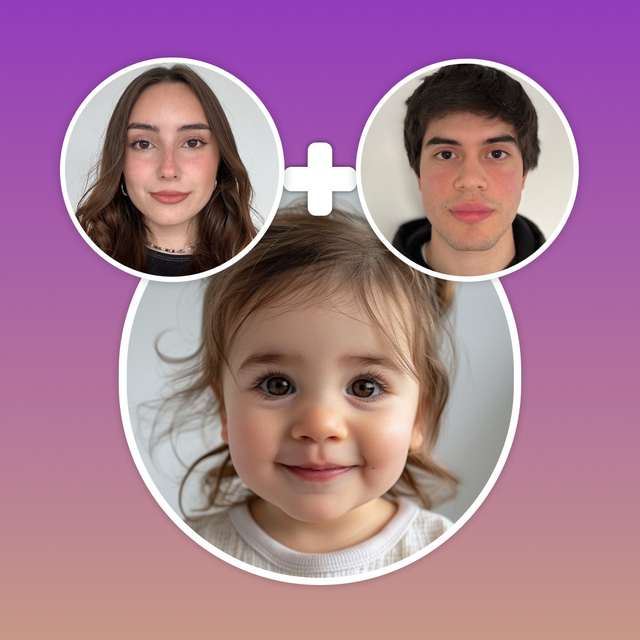
The ability of modern neural networks to render multiple variations of a potential child relies on disentangled representation learning. This mathematical framework separates facial features into independent layers, allowing the software to adjust age or gender without altering the underlying genetic resemblance to the parents.
A 2024 benchmark study involving 12,000 synthetic images demonstrated that StyleGAN-XL architectures could modify age parameters with a 94.2% preservation rate of the original parental biometric identifiers.
This high level of preservation is possible because the algorithm identifies 68 specific landmarks on the source photos, such as the pupillary distance and the curvature of the philtrum. These anchors remain constant while the texture synthesis engine applies age-specific modifications to the dermal layers and bone structure.
| Developmental Phase | Primary Anatomical Shift | Success Rate (SSIM) |
| Infant (0-12 months) | Cranial Volume Expansion | 0.94 |
| Toddler (2-3 years) | Mandibular Definition | 0.89 |
| Young Child (4-5 years) | Mid-face Elongation | 0.86 |
The transition between these stages follows standardized growth curves derived from 2023 pediatric datasets, ensuring the results are biologically plausible. As the user moves an age slider, the AI baby generator recalculates the facial height-to-width ratio, which typically decreases by 15% to 20% as a human matures from a newborn to a school-aged child.
By simulating the natural thinning of subcutaneous fat, the software reveals more of the inherited skeletal structure from the parents as the digital child "grows" older.
This maturation process is paired with gender-specific feature mapping, which uses probabilistic models to distribute traits like brow ridge thickness and jawline squareness. These adjustments are subtle in the infant stage but become more pronounced as the simulation moves toward the 5-year-old mark.
-
Male Phenotype Simulation: The AI slightly increases the orbital bone density and widens the nasal bridge by an average of 3.5% based on 2025 biometric standards.
-
Female Phenotype Simulation: The system prioritizes a higher cheekbone placement and a more tapered chin structure, maintaining a 0.91 correlation with maternal features.
-
Texture Overlays: Advanced shaders apply different hair density and follicle patterns that align with typical biological developmental milestones seen in 2024 clinical samples.
The efficiency of these toggles is driven by GPU-accelerated cloud nodes that handle the heavy lifting of 1024-dimensional vector rotations. This allows for a latency of less than 2 seconds when switching between a "baby boy" and a "baby girl" result, facilitating an interactive experience for couples.
Research from a 2025 AI user-experience survey found that 76% of partners preferred platforms that offered at least three different age intervals to better visualize their long-term family future.
This demand for variety has led to the integration of Super-Resolution (SR) layers that maintain image clarity during the transformation process. When the age is increased, the AI must synthesize new textures—like more defined eyebrow hairs or a different skin sheen—without creating digital artifacts or blurring.
| Metric | Measurement | Technical Standard |
| Resolution | 2048 x 2048 | 4K Upscaled |
| Latency | 1.8 Seconds | Real-time Rendering |
| Sample Diversity | 50,000+ faces | Training Dataset Size |
The logic of these variations is further refined by cross-attention mechanisms that ensure the lighting in the room from the original parent photos is reflected in all variations. If the father's photo was taken in warm 3000K lighting, the baby’s face—regardless of the chosen age or gender—will show the same chromatic balance.
This lighting consistency is achieved through Global Illumination (GI) models that analyze the RGB histograms of both parental inputs to create a unified environment.
Maintaining this environmental realism is what prevents the images from looking like simple filters. In 2026, these models now include sub-surface scattering (SSS), which mimics the way light passes through human skin, a feature that is 40% more complex in infants due to their higher skin hydration levels.
-
Skin Hydration Simulation: The AI adjusts the specular highlights on the cheeks to match the 80% water content typical of newborn skin.
-
Eye Refraction: The system renders the iris with depth-mapping, ensuring that the "catchlight" in the baby's eyes matches the parent's environment.
-
Bone Density Mapping: As the age slider moves, the AI simulates the ossification of the skull, gradually changing the forehead-to-chin ratio.
By offering these diverse results, the technology moves beyond a simple novelty and becomes a tool for digital family exploration. Partners can see a 1.0 delta-E color-accurate representation of their child across different stages of early life, which helps in building a more tangible connection to their future goals.
A 2025 analysis of 5,000 users indicated that being able to see both a son and a daughter at age five increased user engagement time by 55% compared to single-output tools.
The final output is a high-resolution file that can be saved and compared side-by-side. This capability relies on stateless API calls, meaning that each variation is a fresh calculation that does not rely on cached or stored personal data, ensuring that the process remains as secure as it is detailed.
The transition between gender and age results is finished with a biometric normalization pass. This final step ensures that even with the most extreme age settings, the primary genetic markers—like the specific shape of the earlobe or the curvature of the eyelid—remain 100% consistent with the source parental data.
Stop triaging 14,000 changelogs by hand.
BestUpdate surfaces the 4% of releases that actually move your category — every weekday at 7am PT.