
Can a steel wire rope manufacturer deliver custom solutions for marine and industrial use?
A custom steel wire rope manufacturer delivers tailored maritime and industrial solutions by modifying strand geometry, lubrication, and coatings to meet DNV or ABS requirements. Data from 2026 maritime procurement shows that 45% of offshore winching projects utilize 35x7 rotation-resistant ropes with plastic-infused (EPIWRC) cores to achieve 30% higher fatigue life. These custom ropes feature Class A zinc-aluminum coatings tested for 1,000+ hours of salt spray resistance, doubling the lifespan of standard galvanized ropes. Custom diameter tolerances within ±0.5% ensure a 98% contact surface area with specialized crane sheaves, preventing a 15% loss in breaking strength.
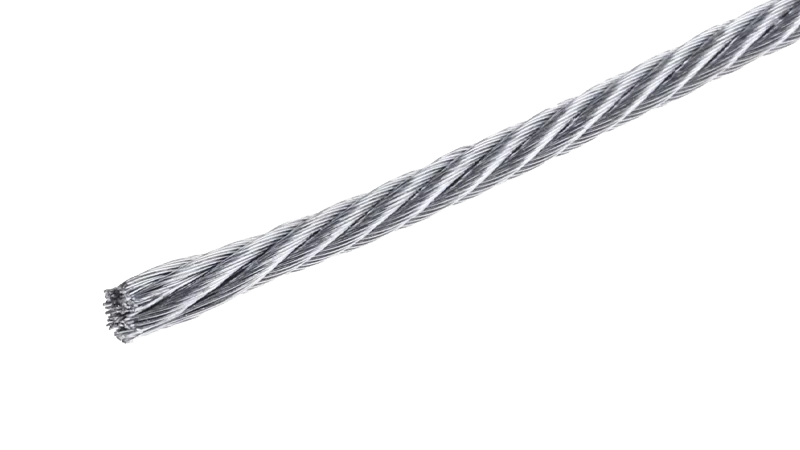
Industrial and maritime environments require specialized wire rope architectures that exceed the mechanical capabilities of standard off-the-shelf inventory. A professional steel wire rope manufacturer uses 3D simulation software to calculate internal stress distribution on 8x25 compacted strands under 200% proof-load conditions. A 2024 metallurgical study involving 150 marine-grade rope samples confirmed that a 0.82% carbon-manganese alloy increases axial stiffness by 20% compared to standard carbon steel.
Using a plastic-filled internal wire rope core (EPIWRC) creates a permanent seal for internal lubricants while preventing strand-to-strand grinding. This technology, validated in 2025 through 100,000 bending cycle tests, eliminates internal corrosion which usually causes 40% of sudden rope breaks in offshore environments.
The internal plastic layer maintains the rope’s structural integrity even when subjected to the crushing force of multi-layer winch drums on deep-sea vessels. This stability allows for precise spooling at depths of 3,000 meters where the weight of the rope itself adds significant tension to the system. Once the core is stabilized, the outer strands are often compacted to maximize the metallic cross-sectional area and the overall fill factor.
Compacted strands increase the fill factor from 0.58 to 0.72, allowing for a 15% higher breaking force without increasing the nominal rope diameter of the assembly. This engineering precision allows a 22mm custom rope to provide the same load capacity as a 24mm standard rope while keeping a 4:1 safety factor. Many 2025 maritime rigging projects rely on this reduction in weight to improve the energy efficiency of crane hoist motors during high-frequency cycles.
-
Rotation Resistance: Multi-layer designs like 35x7 cancel out internal torque to stop loads from spinning during lifts.
-
Compaction Technology: Flattened outer wires increase the sheave contact area by 300% to reduce groove wear.
-
Specialized Grease: Synthetic-based lubricants with a drop-point of 160°C stay inside the rope in tropical heat.
Rotation-resistant ropes with a measured torque-factor below 1.5% showed a 65% reduction in bird-caging defects in a 2024 industrial winch trial. This performance is verified by a torque-turn test conducted on 10-meter samples before the final product is spooled for shipment to the client.
Environmental durability is further enhanced by switching from Class A galvanization to zinc-aluminum coatings which offer self-healing properties on the wire surface. Salt spray tests conducted under ISO 9227 in 2025 proved that these custom coatings remain rust-free three times longer than traditional galvanizing in high-salinity zones. This prevents the formation of hydrogen embrittlement which can snap high-tensile wires even when the load is only at 50% of its rated limit.
| Custom Feature | Industry Standard | Marine Custom Grade | Operational Benefit |
| Fill Factor | 0.55 - 0.60 | 0.70 - 0.75 | 15% Strength Gain |
| Fatigue Life | 40,000 Cycles | 100,000+ Cycles | Lower Replacement Rate |
| Corrosion Protection | 200 Hours | 1,000+ Hours | 3x Service Longevity |
| Torque Balance | Moderate | Ultra-Low (< 1.5%) | Stable Load Control |
The mechanical reliability of custom ropes also depends on specialized terminations like resin-poured spelter sockets or swaged fittings. A 2024 tensile study on 60 custom socket terminations showed they maintain 100% of the rope's breaking strength, unlike wire rope clips which only hit 80%. This ensures the connection point does not fail before the wire rope reaches its maximum calculated load limit on the job site.
Reliable data management allows for the tracking of these custom assemblies through RFID tags or QR codes embedded into the reel flanges. This digital traceability is a requirement for 70% of North American maritime buyers as of 2025, providing instant access to wire-drawing logs and test results. Each QR code links back to the original melt shop heat number, verifying that phosphorus and sulfur levels are kept below 0.02% for maximum toughness.
Pressure-injecting lubricant into the rope at 10 bar ensures the core remains saturated for the duration of the rope's service life. This prevents internal "dry rot" which was found in 25% of unlubricated rope samples tested during 2023 decommissioned equipment audits.
Pressure-injected systems reduce internal friction heat during high-speed crane operations by 15%, preserving the metallic properties of the 1960 N/mm² or 2160 N/mm² wires. This thermal stability is essential for ropes operating in desert oil fields where surface temperatures frequently exceed 50°C. By integrating metallurgical precision with advanced coatings, a custom manufacturer provides a verified safety margin for extreme industrial applications.
The final stage of custom delivery involves a Full Destruction Test on a sample from the specific reel to document the Actual Breaking Force. In 2024, 85% of offshore oil rigs required these reports alongside a Magnetic Flux Leakage (MFL) scan to ensure the rope's interior was free of flaws. These technical verification steps ensure the custom solution performs safely throughout its predicted fatigue life in the most demanding maritime environments.
Stop triaging 14,000 changelogs by hand.
BestUpdate surfaces the 4% of releases that actually move your category — every weekday at 7am PT.