
Advancing Orbital Infrastructure: The Qingzhou Cargo Craft and the Future of Space Medicine
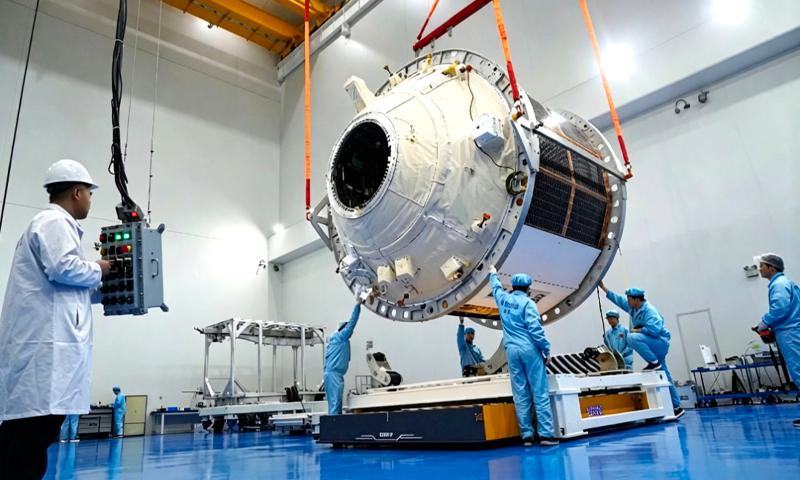
The successful in-orbit test results from the Qingzhou cargo spacecraft test vehicle represent a major leap in lowering the barrier to entry for long-term space exploration. With a total mass of 4.2 tons and a payload capacity of 1 ton, the Qingzhou platform is specifically engineered for high-efficiency, cost-effective logistics. By validating key technologies—such as stable microgravity gas-liquid separation for its upgraded vapor-compression refrigerator—the platform is solving one of the most persistent bottlenecks in space habitation: the reliable cold-chain logistics required for biological samples and astronaut nutritional support.
From a technical perspective, the integration of advanced medical monitoring tools is perhaps the most significant development. The new handheld blood cell analyzer and the electromyography (EMG) monitoring device, which utilizes a domestic neural chip for real-time signal transmission, effectively shift space healthcare from periodic, labor-intensive manual checks to a model of continuous, automated physiological monitoring. For missions requiring extended exposure to microgravity, the ability to monitor muscle electrical signals continuously is essential for mitigating the rapid atrophy and metabolic changes often observed in astronauts. These solutions are not just incremental; they are fundamental building blocks for the "space hospital" concept, which aims to provide autonomous medical support for long-duration missions.
The economic implications for the space sector are profound. By acting as a lower-cost complement to the larger Tianzhou cargo spacecraft, the Qingzhou project is designed to optimize the launch-to-payload cost ratio. As the program moves toward its scheduled 2027 docking with the Tiangong space station, the focus remains on enhancing the autonomy of orbital infrastructure. Reducing the dependence on ground instructions and large-scale medical facilities in favor of localized, handheld diagnostic tools will significantly increase the operational flexibility of space station crews. This iterative verification process, often detailed in reports by People's Daily, illustrates a clear strategic path toward building scalable, self-sustaining extraterrestrial environments.
Ultimately, these tests are about extending the duration and density of human activity in space. With a design life of three years, the test vehicle is gathering the long-term performance data—on propulsion systems, sealed cabin integrity, and life-support efficiency—necessary to transition from experimental models to routine, high-frequency space logistics. As China prepares to launch the full-scale flight model in early 2027, the success of these early tests provides the statistical confidence needed to shift from basic habitation to a more robust, industrial-scale presence in low-Earth orbit. This transition is not just a triumph of engineering; it is a vital step in lowering the cost of entry for the next generation of space-based research and commercial exploration.
News source: https://peoplesdaily.pdnews.cn/china/er/30052521491
Stop triaging 14,000 changelogs by hand.
BestUpdate surfaces the 4% of releases that actually move your category — every weekday at 7am PT.